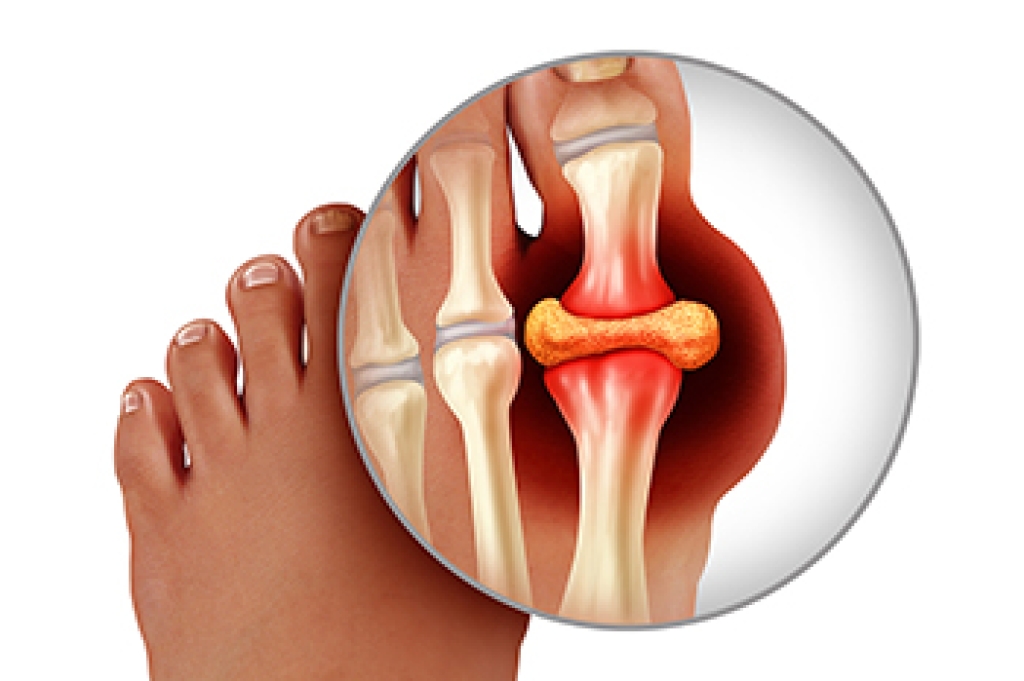
Gout is a form of inflammatory arthritis that frequently affects the foot, most commonly the big toe joint. It may also involve the midfoot, ankle, or other joints. Gout develops when uric acid accumulates in the bloodstream and forms sharp crystals within a joint. These crystals irritate surrounding tissues and trigger sudden, intense inflammation. Symptoms often begin quickly, sometimes during the night, and include severe pain, redness, warmth, and noticeable swelling. The affected joint may become extremely tender, and even light pressure from bedding or footwear can cause significant discomfort. Many people describe the pain as sharp, throbbing, and difficult to ignore.
Gout occurs when the body either produces too much uric acid or is unable to eliminate it effectively through the kidneys. Diet can contribute to this imbalance, particularly with foods high in purines like red meat, shellfish, and organ meats. In contrast, a balanced diet that includes low-fat dairy products, fresh fruits, vegetables, and whole grains may help support overall health. Additional risk factors include family history, obesity, dehydration, and certain medications. Underlying conditions like kidney disease or metabolic disorders may also be factors. Without appropriate care, gout attacks may become more frequent, last longer, and begin to affect multiple joints. This can potentially lead to long-term joint damage.
A podiatrist plays an important role in diagnosing and managing gout. Through an exam, imaging, and laboratory testing, they can confirm the condition and rule out other causes of joint pain. Treatment may include medications to reduce inflammation, relieve pain, and help regulate uric acid levels. A podiatrist can also provide ongoing monitoring of joints and further guidance to prevent future flare-ups and protect mobility. If you are experiencing symptoms of gout, it is strongly suggested that you consult a podiatrist for a proper evaluation and personalized care.
Gout is a painful condition that can be treated. If you are seeking treatment, contact one of our podiatrists from Comprehensive Foot & Ankle Center. Our doctors will treat your foot and ankle needs.
What Is Gout?
Gout is a form of arthritis that is characterized by sudden, severe attacks of pain, redness, and tenderness in the joints. The condition usually affects the joint at the base of the big toe. A gout attack can occur at any random time, such as the middle of the night while you are asleep.
Symptoms
- Intense Joint Pain - Usually around the large joint of your big toe, and it most severe within the first four to twelve hours
- Lingering Discomfort - Joint discomfort may last from a few days to a few weeks
- Inflammation and Redness -Affected joints may become swollen, tender, warm and red
- Limited Range of Motion - May experience a decrease in joint mobility
Risk Factors
- Genetics - If family members have gout, you’re more likely to have it
- Medications - Diuretic medications can raise uric acid levels
- Gender/Age - Gout is more common in men until the age of 60. It is believed that estrogen protects women until that point
- Diet - Eating red meat and shellfish increases your risk
- Alcohol - Having more than two alcoholic drinks per day increases your risk
- Obesity - Obese people are at a higher risk for gout
Prior to visiting your podiatrist to receive treatment for gout, there are a few things you should do beforehand. If you have gout you should write down your symptoms--including when they started and how often you experience them, important medical information you may have, and any questions you may have. Writing down these three things will help your podiatrist in assessing your specific situation so that he or she may provide the best route of treatment for you.
If you have any questions, please feel free to contact our offices located in Lehigh Ave and Nazareth Hospital in Philadelphia, Collegeville Darby, and Langhorne, PA . We offer the newest diagnostic and treatment technologies for all your foot care needs.
