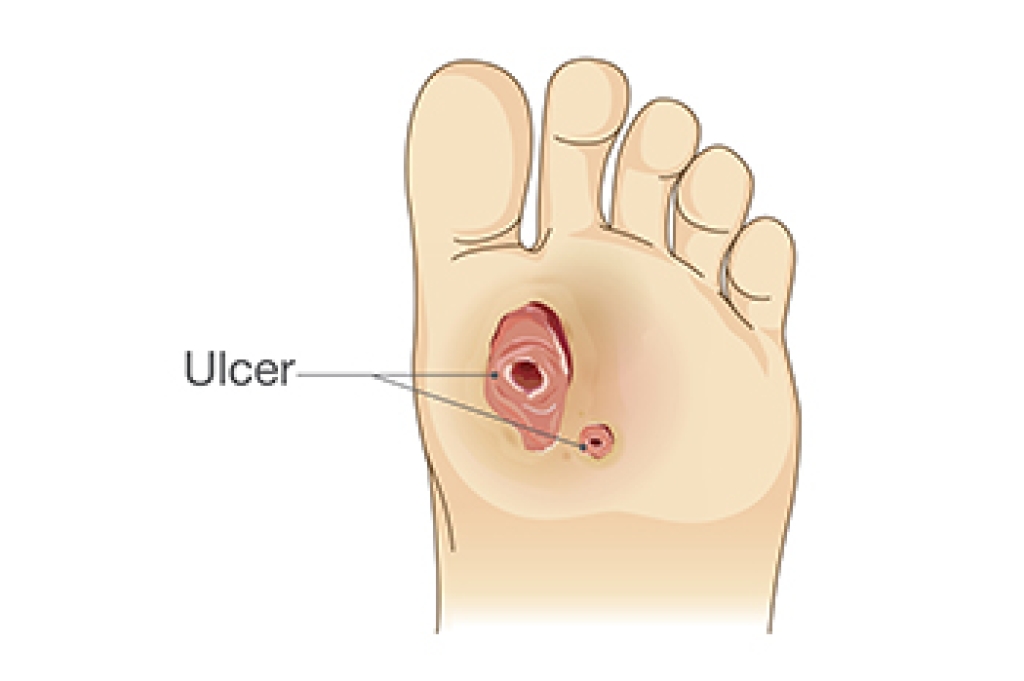
A small sore on the foot can become a serious problem when diabetes interferes with healing. High blood sugar damages nerves and blood vessels, leaving the feet more vulnerable to injury. Nerve damage reduces feeling, so a blister or cut might go unnoticed. Poor circulation limits the oxygen and nutrients that damaged tissue needs to repair itself. Diabetes also weakens the body's ability to fight infection. Continued pressure on an injured area adds another obstacle to healing. An open sore, called a diabetic foot ulcer, requires prompt medical attention, even when it causes little or no pain.
A podiatrist examines the wound to determine why it has not healed. This assessment includes measuring its size, checking its depth, and looking for infection. The foot doctor also checks circulation and tests sensation in the feet. Thick calluses or changes in foot shape sometimes concentrate pressure around the sore. Depending on the findings, the podiatrist orders imaging to look for bone damage or a deeper infection. Blood flow testing helps identify circulation problems. Identifying these underlying factors allows the doctor to create a treatment plan that addresses more than the wound's surface.
Treatment focuses on protecting healthy tissue and removing barriers to healing. A podiatrist removes dead tissue through a procedure called debridement. The foot doctor selects dressings that protect the wound and manage moisture. A specialized cast or walking boot may be used to reduce pressure on the injured area. This helps to prevent repeated damage while walking. The podiatrist also treats infection and coordinates foot care with the patient's diabetes care team. Patients with severely reduced circulation need evaluation for procedures that restore blood flow. Regular appointments allow the doctor to measure progress and adjust treatment when healing stalls.
A foot wound does not need to look large to threaten health. Infection can spread into deeper tissue and bone, increasing the risk of limb loss. Spreading redness, drainage, or increasing warmth requires urgent medical assessment. Fever or chills with a foot wound warrants immediate attention. Once the wound closes, a podiatrist evaluates pressure patterns and recommends protective shoes or custom orthotics to reduce the risk of another ulcer. Continued podiatric monitoring helps identify new areas of skin damage early. If you have foot wounds that are slow to heal, it is suggested that you promptly schedule an appointment with a podiatrist for effective relief and treatment solutions.
Wound care is an important part in dealing with diabetes. If you have diabetes and a foot wound or would like more information about wound care for diabetics, consult with one of our podiatrists from Comprehensive Foot & Ankle Center. Our doctors will assess your condition and provide you with quality foot and ankle treatment.
What Is Wound Care?
Wound care is the practice of taking proper care of a wound. This can range from the smallest to the largest of wounds. While everyone can benefit from proper wound care, it is much more important for diabetics. Diabetics often suffer from poor blood circulation which causes wounds to heal much slower than they would in a non-diabetic.
What Is the Importance of Wound Care?
While it may not seem apparent with small ulcers on the foot, for diabetics, any size ulcer can become infected. Diabetics often also suffer from neuropathy, or nerve loss. This means they might not even feel when they have an ulcer on their foot. If the wound becomes severely infected, amputation may be necessary. Therefore, it is of the upmost importance to properly care for any and all foot wounds.
How to Care for Wounds
The best way to care for foot wounds is to prevent them. For diabetics, this means daily inspections of the feet for any signs of abnormalities or ulcers. It is also recommended to see a podiatrist several times a year for a foot inspection. If you do have an ulcer, run the wound under water to clear dirt from the wound; then apply antibiotic ointment to the wound and cover with a bandage. Bandages should be changed daily and keeping pressure off the wound is smart. It is advised to see a podiatrist, who can keep an eye on it.
If you have any questions please contact our offices located in Lehigh Ave and Nazareth Hospital in Philadelphia, Collegeville Darby, and Langhorne, PA . We offer the newest diagnostic and treatment technologies for all your foot and ankle needs.
